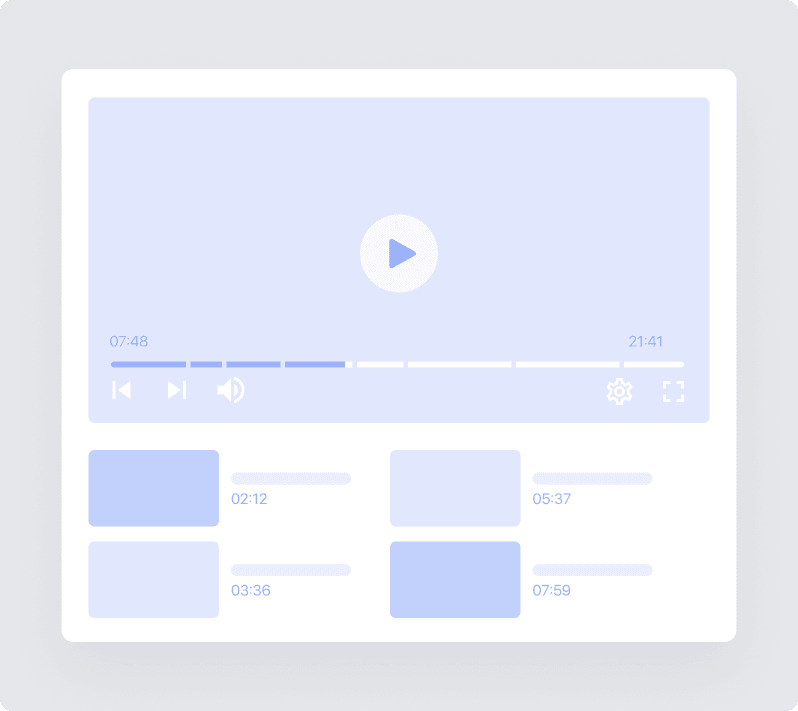
Live View & Historical Playback
Monitor employee screens in real-time or review past activity with historical playback to gain complete visibility into user activity and computer activity.
Learn More
Cut incident response time in half and reduce false security alarms by 85% with intelligent monitoring that knows the difference.
All it takes is one wrong email—whether accidental or intentional—to put your company at risk.
Without visibility into workplace email activity, you’re leaving the door wide open to insider threats, data leaks, and compliance failures.
Track every inbound and outbound email with instant alerts for unauthorized sharing, suspicious attachments, and abnormal activity.
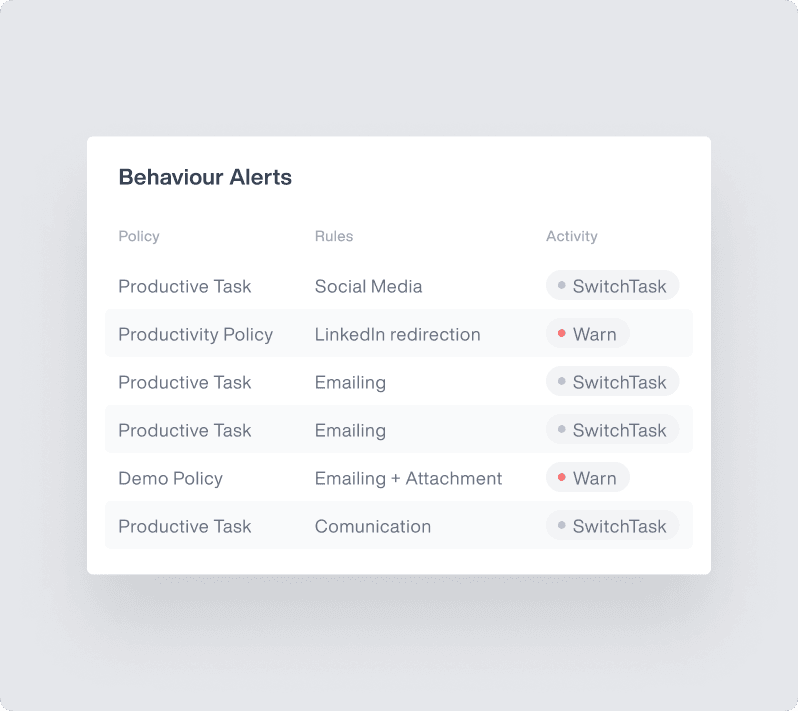
Automatically detect and prevent sensitive information from being shared externally through emails, attachments, or BCC misuse.
Detect mass email forwarding, excessive external communication, and unauthorized data exfiltration in real-time.
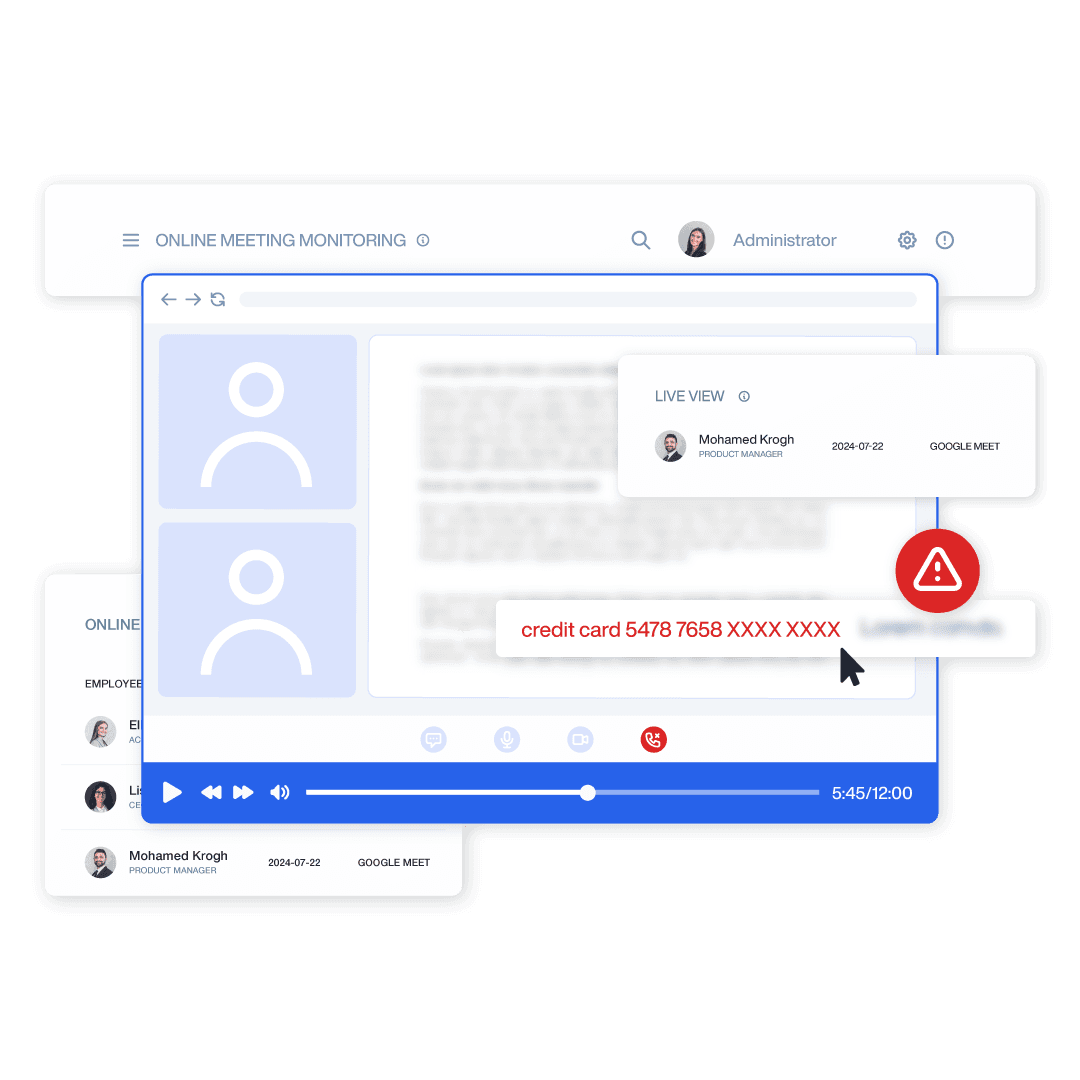
Maintain detailed email logs and audit trails to ensure compliance with HIPAA, GDPR, SOC2, and other industry standards.
Monitor file attachments in emails to stop unauthorized file transfers that could lead to intellectual property theft.
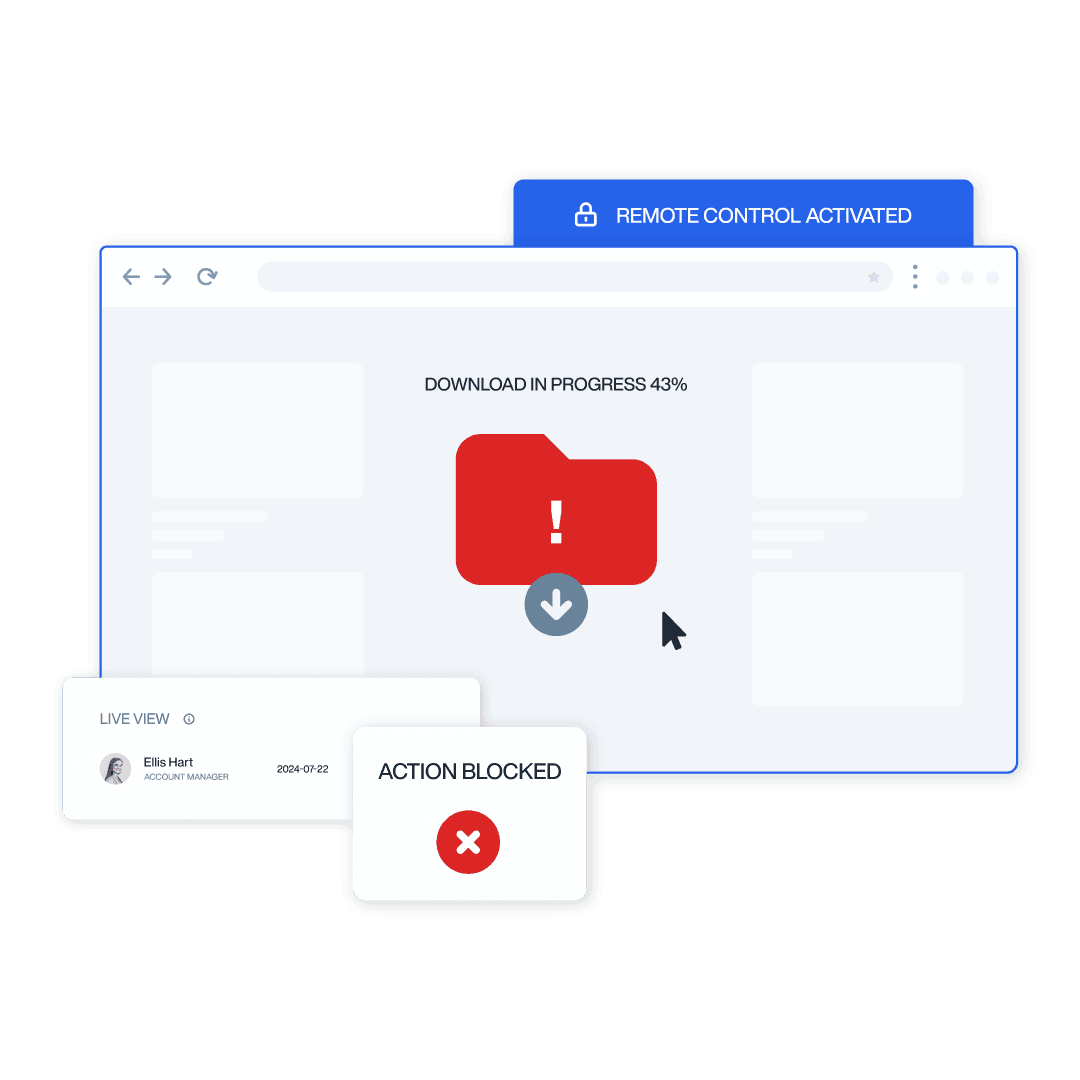
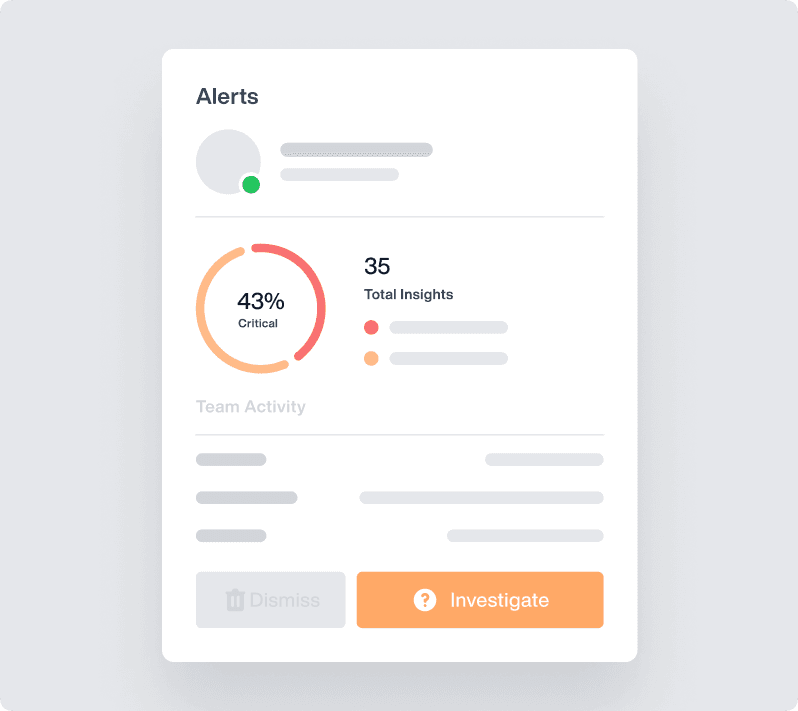
Set up custom keyword alerts to flag sensitive phrases and prevent confidential data from leaving your organization.
“Easy Implementation, Great UI, and amazing product. We leverage Teramind to manage high-risk situations to get in-depth visibility and alerting. It has far surpassed our expectations and has saved us significant data loss.”
“Cost effective and feature reach DLP and User Behaviour Monitoring Tool. Easy to set up even on-premises. No end-user impact. Cost-effective. Both DLP and User behavior Monitoring.”
“It’s been an amazing experience and a wonderful software that does exactly what you want! Security, control, peace of mind, the ability to know all that is going on in the organization. Very easy to use. It gives you real data! It has given us the protection that we need!”
$7B Manufacturing Enterprise
“Cost effective and feature reach DLP and User Behaviour Monitoring Tool. Easy to set up even on-premises. No end-user impact. Cost-effective. Both DLP and User behavior Monitoring.”

$3B Managed Services Provider
“It’s been an amazing experience and a wonderful software that does exactly what you want! Security, control, peace of mind, the ability to know all that is going on in the organization. Very easy to use. It gives you real data! It has given us the protection that we need!”
Head of IT Security
Yes. Attachment monitoring ensures employees do not send unauthorized, sensitive, or confidential files via email. Admins can block unapproved file transfers or quarantine risky attachments.
Teramind maintains comprehensive email logs and audit trails to ensure compliance with GDPR, HIPAA, SOC2, and other industry standards.
Businesses can also generate custom compliance reports for regulatory audits.
Employers can monitor emails sent from company equipment and work email accounts, but they cannot access personal email accounts (e.g., Gmail, Yahoo) without explicit consent.
Yes. Teramind’s content filtering and keyword alerts flag outbound emails containing classified, sensitive, or personally identifiable information (PII).
Attachment monitoring also prevents unauthorized file transfers.
Yes. Businesses can configure custom keyword alerts for email communications. Suspicious words, sensitive data, or unauthorized sharing attempts trigger real-time notifications.
Yes, you trust your team— but trust isn’t a security strategy. One accidental CC, one unauthorized attachment, or a single phishing email is all it takes to put your company’s data at risk.
But the challenge here is not ‘technical’; it’s human.
Striking that balance is tricky. Getting it wrong can lead to legal risks, employee distrust, and regulatory fines you can’t afford. So, where’s the middle ground? Before we get into that, let’s answer your burning question:
Short answer — Yes.
However, the ‘legality’ of monitoring your employees’ emails depends on jurisdictional regulations, industry-specific compliance requirements, and what constitutes employer rights vs. employee privacy.
That means, excessive or undisclosed employee monitoring can result in legal liabilities, privacy violations, and reputational damage. Don’t overdo it.
Now to the main topic—
Employee email monitoring is the tracking, analyzing, and reviewing of workplace email communications to ensure legal compliance, prevent security threats, detect insider threats, and improve workplace productivity.
This typically involves using employee monitoring software to scan email content, attachments, metadata, and recipient details for policy violations, suspicious activity, or unauthorized data sharing.
Many industries have strict regulations that require businesses to protect sensitive or confidential information.
Organizations must comply with laws like GDPR, HIPAA, SOX, and FINRA, which mandate how personal and financial data is handled. Email monitoring ensures employees follow these compliance rules by preventing unauthorized sharing of protected information.
For instance, healthcare organizations can detect when patient information is being shared without proper security protocols, preventing costly HIPAA violations. Similarly, financial institutions can track email exchanges to ensure that insider trading regulations are not breached.
Employees handle sensitive company information daily, including financial data, customer records, and intellectual property.
Whether intentional or accidental, an email sent to the wrong recipient or forwarded outside the organization can lead to data leaks. Some employees may also attempt to take confidential information when leaving a company. For example, in 2023, two former Tesla employees leaked the personal information of over 75,000 employees by sharing confidential data with a third party [*].
Monitoring helps detect and prevent cases like this, reducing the risk of disgruntled employees engaging in corporate espionage, insider threats, and accidental exposure.
Email communication should remain professional and respectful. However, some employees misuse company email to send inappropriate messages, discriminatory remarks, or harassing content.
Monitoring ensures that workplace policies are followed, helping organizations address violations and maintain a safe and inclusive work environment. It also provides documentation for HR investigations if needed.
Businesses develop proprietary technologies, strategies, and processes that give them a competitive advantage. If employees share this information externally, it can compromise the company’s market position and expose them to legal risks.
Email monitoring helps protect:
This protection extends beyond deliberate theft to include accidental disclosures that could violate non-disclosure agreements (NDAs) with partners and clients.
Laws governing employee email monitoring vary by country, and businesses must ensure they comply with local, national, and international regulations.
Below are key legal frameworks that impact email monitoring by region and industry:
The GDPR sets strict guidelines on how organizations can process and monitor employee data. Under this regulation:
Key Considerations:
Ethical Implication: Multinational companies must navigate applying different ethical standards across regions, potentially creating ‘unfair’ treatment of employees.
The ECPA (1986) is the primary law governing electronic communications in the workplace. Under this act. It extends government restrictions on wiretaps to include electronic communications, such as emails, phone calls, and other digital transmissions.
Under this law:
Key Considerations:
Ethical Implication: In a work-from-home environment, monitoring creates ethical questions about where employer rights end and personal privacy begins.
PIPEDA governs private-sector privacy laws in Canada. Under PIPEDA:
Key Considerations:
Ethical Implication: PIPEDA reinforces the need for fairness and transparency. Even when employers have the right to monitor, they should set clear boundaries to avoid a perception of excessive surveillance.
Beyond regional laws, industry-specific regulations impose additional compliance requirements for email monitoring. Organizations in healthcare, finance, and other regulated sectors must ensure email communications are both monitored for compliance and protected against unauthorized access to prevent legal and financial risks.
HIPAA applies to:
Since email is a primary communication channel, healthcare organizations must ensure that protected health information (PHI) is not improperly shared via email.
Ethical Implication: The sensitivity of patient data means that monitoring must be carefully controlled. It should focus on compliance, not unnecessary surveillance of employee communication.
SOX was enacted to prevent corporate fraud and financial misconduct by ensuring transparency in financial reporting.
Email communications often contain critical financial data, which makes email monitoring essential for compliance.
Ethical Implication: Financial institutions must balance compliance monitoring with creating safe channels for legitimate whistleblowing.
One of the biggest concerns surrounding email monitoring is employee privacy. Many employees perceive email surveillance as an intrusion into their personal space, even when using company equipment.
The fear of being constantly watched creates a culture of mistrust, lower morale, and even reduces productivity and employee engagement.
This issue becomes more complex when employees use company-issued emails for personal matters, such as communicating with family, handling personal finances, or even discussing confidential health matters.
If employees feel like they are under surveillance without justification, resentment may build, leading to disengagement, legal complaints, or high turnover.
On any given day, a business might generate thousands or even millions of emails. Manually monitoring this volume is impossible, and even automated tools can struggle to differentiate between genuine threats and harmless messages.
Organizations often face false positives, where legitimate emails are flagged as risky, or false negatives, where real threats go undetected.
This overload of alerts leads to security teams being stretched thin, missing key threats, or wasting time on unnecessary investigations.
Determining the right scope of monitoring—’what to review and at what frequency?’—can be complex. Too narrow, and you might miss critical incidents. Too broad, and you may breach privacy or get overwhelmed by non-actionable data.
Worse, in many jurisdictions, excessive or undisclosed email monitoring can lead to lawsuits, regulatory fines, and reputational damage.
For example:
When employees feel restricted by email monitoring, they turn to unapproved communication channels to bypass surveillance.
This includes:
These workarounds create serious security vulnerabilities, as IT teams lose visibility over how private data is shared and who has access. In a recent Gartner report, around 41% of employees use technology that’s not approved by the company [*].
Example: Employees at Finastra used unauthorized cloud storage, exposing 400GB of client data within 24 hours [*].
With almost every company’s workforce either going remote or hybrid, monitoring employee emails becomes more complex.
Unlike in-office setups where corporate networks and devices are controlled, remote employees may:
The distributed nature of this creates significant blind spots in traditional security frameworks designed for centralized office environments. This makes it difficult to monitor remote employees without being intrusive.
Before implementing email monitoring, organizations must define, document, and communicate a well-structured policy that outlines:
Best Practice:
Not all employees pose the same level of risk. As such, monitoring should be proportional to security needs. Over-monitoring low-risk employees wastes resources and can violate privacy rights, while failing to monitor high-risk roles creates security vulnerabilities.
The best way to do this is classifying employees by risk level:
Additionally, limit access to email monitoring logs using least privilege access (LPA) principles to prevent misuse or unauthorized access.
Best Practice:
One of the biggest security risks is employees intentionally or accidentally sending company data to external recipients. Without proper controls, sensitive information can be leaked, stolen, or misused.
Here’s what to do:
Best Practice:
Employees often see email monitoring as intrusive unless they understand its purpose. Education is key to preventing resistance.
Here’s what the training should cover:
Best Practice:
Monitoring policies must evolve as threats, compliance requirements, and business needs change. Regular audits help fine-tune monitoring settings, ensure compliance, and minimize unnecessary surveillance.
Here’s what to do:
Best Practice:
The truth is, you don’t want to micromanage every email. You don’t have the time, and your employees don’t want to feel like they’re under a microscope. But at the same time, you can’t afford to leave your business exposed to external attacks, insider threats, or compliance risks.
So, what you really need is a solution that does three things:
And that’s exactly what Teramind delivers.
Security and trust should go hand in hand. With Teramind, they finally can.
See Teramind in Action →
Leverage Teramind’s unparalleled power to solve your workforce challenges.
Monitor employee screens in real-time or review past activity with historical playback to gain complete visibility into user activity and computer activity.
Learn MoreTeramind’s OCR functionality allows you to extract text from images and screenshots, enhancing your monitoring and analysis capabilities.
Learn MoreTrack employee time spent on websites, identify unproductive web browsing, and enforce company policies with comprehensive website monitoring.
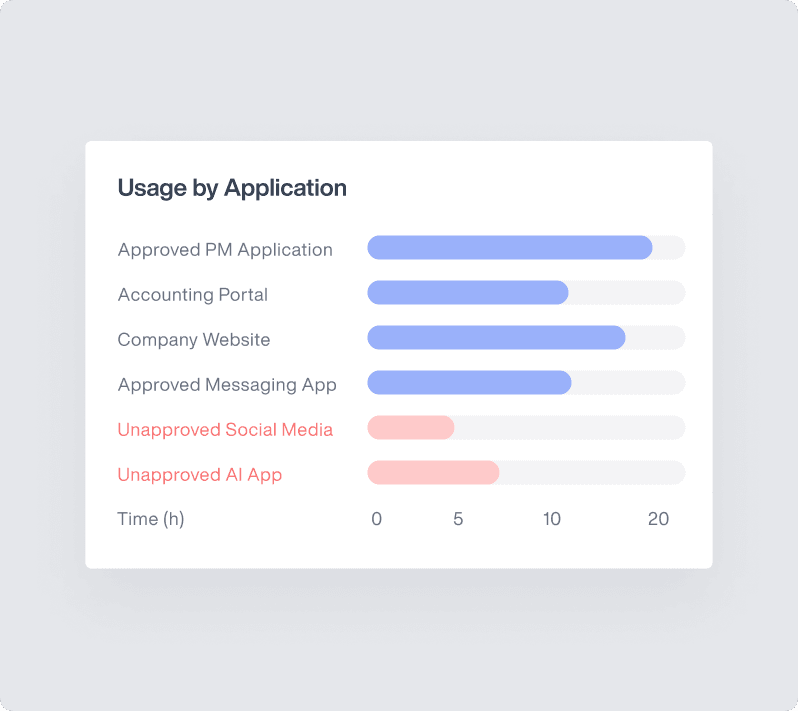
Learn MoreMonitor application usage, track time spent on specific apps, and identify potential security risks with detailed application monitoring on your endpoints.
Learn MoreMonitor employee emails to prevent data leaks, ensure compliance with company policies, and protect sensitive information.
Learn MoreTrack instant messages and conversations to gain insights into team communication and collaboration, and ensure compliance.
Learn MoreMonitor social media activity to protect your brand reputation, prevent data leaks, and ensure employees adhere to company policies.
Learn MoreGain visibility into network activity, identify potential security threats, and optimize network performance with network monitoring.
Learn MoreMonitor employee activity within Citrix environments, track application usage, and ensure data security with specialized Citrix monitoring on your devices.
Learn MoreTake control of remote employee computers in real-time to provide support, troubleshoot issues, or prevent data breaches and insider threats.
Learn MoreRecord RDP sessions to gain a comprehensive understanding of user activity, troubleshoot technical problems, and ensure compliance.
Learn MoreAnalyze employee productivity with detailed metrics, identify areas for improvement, and boost productivity across your team members.
Learn MoreTrack active and idle time to understand how employees spend their work hours and optimize time management and productivity.
Learn MoreIdentify unproductive work time, analyze patterns, and implement strategies to improve efficiency and time management.
Learn MoreGet Started
Join 10,000+ organisations that use Teramind to turn workforce activity into competitive advantage. No credit card required to start.
Success Stories
Easy implementation, great UI, and an amazing product. We leverage Teramind to manage high-risk situations with in-depth visibility and real-time alerting. It has far surpassed our expectations and has saved us from significant data loss.

IT Security & Risk Manager
$7B Manufacturing Enterprise
Convenient and comprehensive cloud-based PC management software. It’s easy to install, access, and gain visibility across client PCs. This is a mature and feature-rich solution for both on-premise and remote environments.

Larissa H.
IT Support Specialist
The best way and tools to manage and protect access to sensitive data, with strong visibility and control capabilities. The platform helps us safeguard company resources and improve operational efficiency with minimal manpower.

Yakir D.
CIO
We were looking for a better way to protect sensitive financial data without overcomplicating our workflows. Teramind helped us tighten controls around data transfers and quickly spot unusual activity. It’s been especially helpful during compliance reviews, since we can easily pull the reports we need. Overall, it’s added an extra layer of confidence to our security program.

Michael S.
Chief Information Security Officer
In healthcare, safeguarding patient information is a daily priority. Teramind has given us clearer visibility into how sensitive data moves across our systems, which has helped us strengthen our internal controls. The alerts are practical and easy to act on, and the reporting makes audit preparation much smoother. It’s been a valuable addition to our security toolkit.

Rachel K.
Director of Health IT
We needed a solution that could support both our clinical and administrative environments without being overly complex. Teramind was straightforward to deploy and gave us better insight into potential risks across our endpoints. When questions come up, the investigation tools make it easy to review what happened and respond quickly. It’s helped us stay proactive instead of reactive.

Jonathan P.
VP of Information Systems

4.6 out of 5 from 148 reviews

4.6 out of 5 from 86 reviews

4.8 out of 5 from 90 reviews